
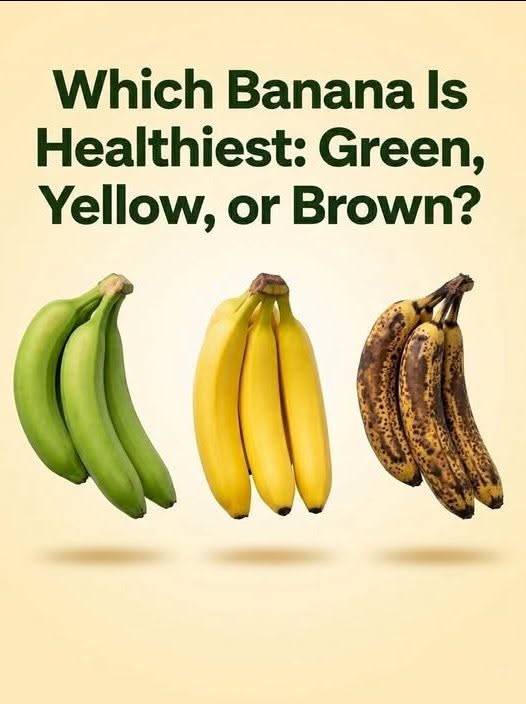
Support digestive health
Promote feelings of fullness
Provide slower, steadier energy
Reduce sudden blood sugar spikes
Many people who are trying to manage appetite or avoid energy crashes prefer slightly green bananas for this reason.
The texture is firmer and the flavor is more mild, which makes green bananas popular in smoothies or cooked dishes in many cultures around the world.
Some people also find that green bananas keep them satisfied longer than fully ripe ones.
Yellow Bananas: The Balanced Everyday Option
The bright yellow banana is what most people consider “perfectly ripe.”
At this stage, some of the resistant starch has converted into natural sugars like glucose, fructose, and sucrose. The fruit becomes softer, sweeter, and easier to eat while still retaining a good amount of fiber.
Yellow bananas are often considered the most versatile stage because they provide:
Quick but moderate energy
Natural sweetness
Potassium and vitamin B6
Easy portability for snacks or workouts
This is one reason athletes often eat bananas before exercise. The natural carbohydrates provide accessible fuel that the body can use quickly during physical activity.
Yellow bananas are also easier on the digestive system than green bananas for many people while still avoiding the extreme softness and sweetness of overripe fruit.
For everyday snacking, this stage works well for most healthy adults.
Brown Spotted Bananas: Sweeter and Rich in Antioxidants
Many people throw away bananas as soon as brown spots appear on the peel. In reality, spotted bananas are still perfectly usable and may even provide additional nutritional advantages.
As bananas continue ripening, the remaining starch converts almost entirely into simple sugars.
This gives brown bananas their soft texture and intense sweetness.
For Complete Cooking STEPS Please Head On Over To Next Page Or Open button (>) and don’t forget to SHARE with your Facebook friends
