
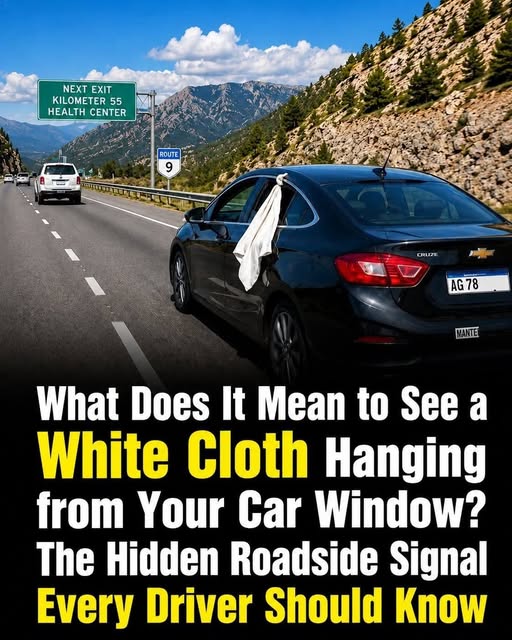
A simple white cloth could signal an emergency—here’s what it really means.
Many drivers have noticed a white cloth hanging from a car window without knowing its purpose. Although it is not an official traffic sign, this long-standing practice is widely recognized by experienced motorists as an informal way to communicate that a vehicle is experiencing trouble. Understanding this signal can help you respond safely and avoid unnecessary confusion on the road.

Most people are familiar with hazard lights, warning triangles, and roadside flares. However, there’s another signal that many drivers may encounter but never fully understand—a white cloth hanging from the window or door of a vehicle. While it is not part of any official traffic code, this simple gesture has been used for decades in many places to quietly communicate that a driver needs help or that the vehicle has broken down.
The tradition dates back to a time before mobile phones became common. When a vehicle experienced mechanical trouble on a highway, drivers often had no quick way to call for assistance. Hanging a white cloth, towel, or handkerchief from the window became an easy way to let passing motorists and law enforcement know that the vehicle had a problem but that the occupants had likely gone to seek help or were waiting for roadside assistance.


Although practices vary by country and region, the meaning is generally similar. A white cloth usually indicates that the vehicle is disabled rather than abandoned. It tells other drivers that the situation has already been noticed and that assistance may already be on the way. This can reduce unnecessary concern while still alerting authorities that the vehicle deserves attention.
If you come across a car displaying a white cloth, avoid stopping abruptly or creating another traffic hazard. If it is safe to do so, slow down, remain alert, and observe whether anyone inside the vehicle appears to need immediate medical assistance. If the car is parked in a dangerous location or seems to have been there for an unusually long time, notifying highway patrol or local emergency services may be the safest and most helpful action.
