
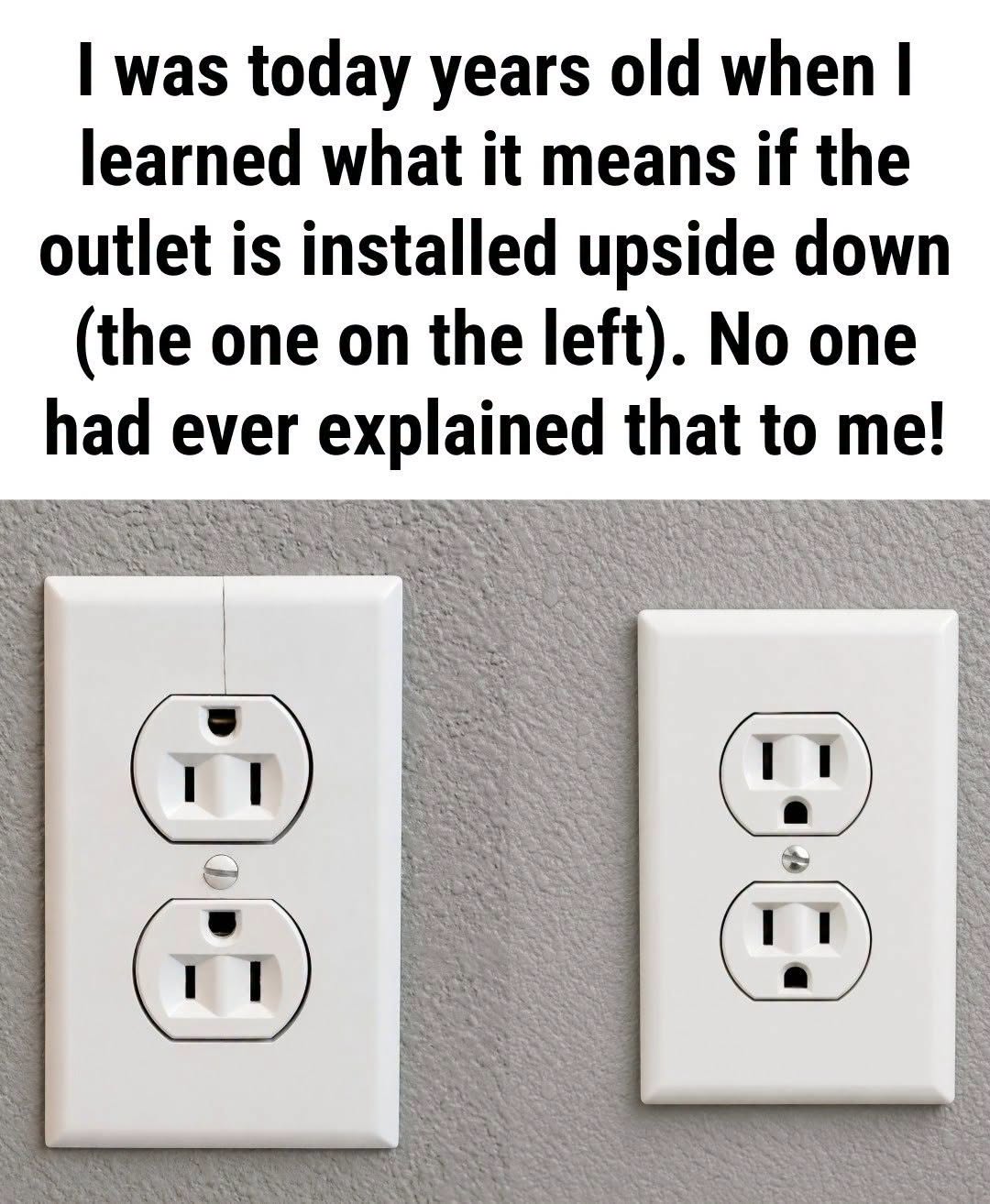
Most of us will see grounding holes on the bottom of our outlets. So, when we encounter an outlet that is flipped upside down, it’s natural to assume that someone did the installation incorrectly. However, many times, that flipped outlet is intentional. In many homes, an upside-down outlet serves as a visual cue that a particular receptacle is being controlled by a wall switch. It doesn’t mean that flipping an outlet automatically makes it a switch-controlled receptacle. It does indicate that you may come across this type of setup in a bedroom, living room, or older homes that don’t have a ceiling light.
What does an upside-down outlet usually represent?
An upside-down outlet typically represents a switched outlet. This means a wall switch controls the flow of electricity to the entire or partial portion of the receptacle. And usually to allow plugging in a lamp and then turning it on with the wall switch.
Flipped outlet orientations are commonly seen in rooms that weren’t originally designed with a built-in overhead light. Instead of installing a ceiling fixture, the builder chose to wire a switched receptacle. Plug a table lamp or floor lamp into the outlet, flip the wall switch, and your lamp operates similarly to how you’d use a room light.
Typically, only one half of the outlet is switched. One half is always on, and the other is turned on and off via the wall switch. Therefore, you can use the always-on portion for a clock, charger, etc., and use the switched portion for your lamp.
Flipped outlets serve as a visual cue
When an outlet is flipped over, it serves as a quick way to identify which outlet is switch-controlled. Homeowners, renters, electricians, and prospective buyers can quickly recognize that the flipped outlet may represent a switch-controlled outlet.

