
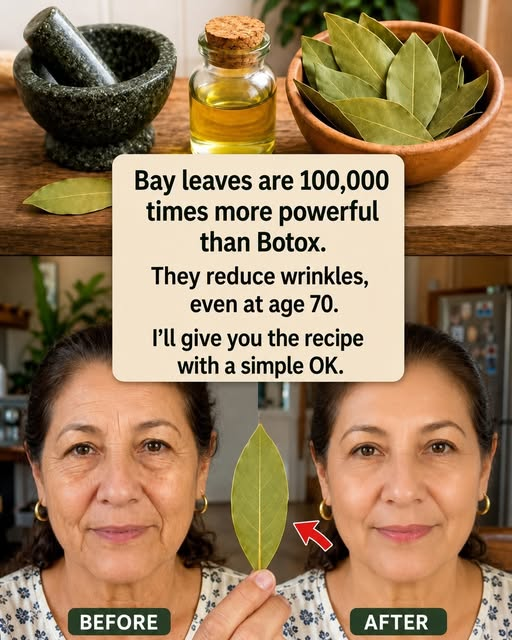
Botox works through a very specific medical mechanism. It temporarily blocks nerve signals to muscles, reducing muscle contractions that cause expression lines. This effect is:
- Targeted (specific muscles)
- Injectable (delivered under the skin)
- Temporary (typically 3–6 months)
- Dose-controlled and medically regulated
A plant extract applied to the skin cannot replicate this mechanism. No known topical herb can selectively block neuromuscular signaling in the same way.
So the comparison between bay leaves and Botox is not just exaggerated—it is biologically incompatible.
Can bay leaves remove wrinkles?
There is no scientific evidence that bay leaves can eliminate wrinkles, especially deep or age-related lines that develop over decades.
Wrinkles are influenced by:
- Collagen breakdown
- Loss of skin elasticity
- Sun exposure (photoaging)
- Skin thinning with age
- Repeated facial expressions
- Hormonal changes
Once structural collagen damage occurs in deeper skin layers, topical herbs cannot rebuild it to the point of “erasing” wrinkles.
That said, bay leaves do contain compounds with mild antioxidant and antimicrobial properties, which may offer limited cosmetic benefits in very specific contexts:
Possible minor effects:
- Temporary skin soothing
- Mild reduction in oiliness (when used in diluted infusions)
- Antioxidant exposure (very limited in topical use)
- Sensory tightening effect due to drying or astringent properties
These effects are subtle and temporary—not transformative.
Why people think it “works”
Many DIY skincare videos create the illusion of dramatic results due to:
- Lighting changes (before/after manipulation)
- Temporary skin tightening from drying masks
- Reduced puffiness after applying cool compresses
- Natural day-to-day variation in skin appearance
For example, if a bay-leaf infusion is applied as a mask and dries on the skin, it may temporarily tighten the skin surface. This can look like “wrinkle reduction,” but it is not structural change—just surface tension and hydration shift.
Once the skin returns to normal hydration, the effect disappears.
The real properties of bay leaves in skincare
While bay leaves are not a wrinkle cure, they are not useless either. They can be part of gentle, traditional skincare routines when used properly.
Potential properties include:
1. Antioxidant content
Bay leaves contain plant compounds that help neutralize free radicals in lab settings. Free radicals contribute to skin aging, but topical absorption from homemade preparations is limited.
2. Mild antimicrobial activity
Some studies suggest bay leaf extracts may inhibit certain bacteria and fungi. This is more relevant for general skin cleanliness than anti-aging.
3. Astringent effect
When used in diluted form, bay leaf water may slightly tighten the skin temporarily by reducing surface oils.
4. Aromatherapy benefits
The scent of bay leaves can have a calming effect, which indirectly supports stress reduction. Stress is known to worsen skin conditions like acne or eczema.
Safe ways people use bay leaves in skincare
If someone wants to experiment with bay leaves in a non-misleading, realistic way, the safest approaches are mild infusions rather than concentrated or irritating applications.
Bay leaf infusion toner (gentle use)
Ingredients:
- 5–8 dried bay leaves
- 2 cups water
Method:
- Boil the water
- Add bay leaves and simmer for 10–15 minutes
- Let it cool completely
- Strain and store in a clean container in the refrigerator (up to 3–4 days)
Use:
- Apply with cotton as a light toner
- Use 2–3 times per week
What it does NOT do:
- Remove deep wrinkles
- Replace medical skincare
- Lift sagging skin
Bay leaf steam facial
Method:
- Boil a pot of water with a few bay leaves
- Remove from heat
- Allow steam to cool slightly
- Steam face for 5–8 minutes at a safe distance
Possible effects:
- Temporary pore cleansing sensation
- Relaxation
- Mild softening of surface oils
Again, this is cosmetic comfort—not anti-aging treatment.
Risks and limitations
Even natural ingredients can cause issues if misused.
Possible concerns include:
- Skin irritation in sensitive individuals
- Allergic reactions
- Over-drying if used too frequently
- Eye irritation from steam
More importantly, the biggest risk is false expectation. Believing that a kitchen herb can replace dermatological treatments may delay effective skincare interventions.
Why anti-aging myths persist
