
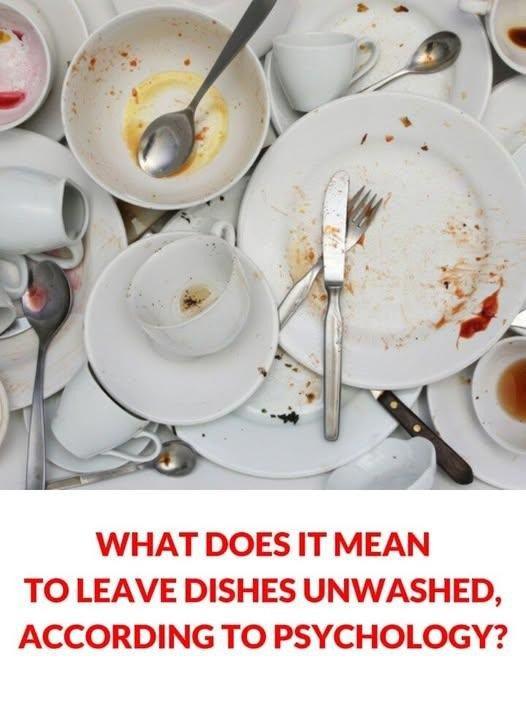
A notable study published in the journal Environment and Behavior found that women who described their homes as cluttered or unfinished showed higher levels of the stress hormone cortisol throughout the day compared to those who described their homes as restful or restorative. The sink full of dishes, in other words, was not just a visual nuisance — it was a physiological stressor.
Other research from Princeton University's Neuroscience Institute demonstrated that physical clutter competes for your attention, reducing your ability to focus and process information. Every time you walk past that pile of dishes, your brain registers it as an unfinished task — a nagging open loop that quietly consumes mental energy.
Interestingly, however, a separate study from the University of Minnesota suggested that messy environments can actually boost creative thinking. Participants in disorganized rooms generated more creative uses for everyday objects than those in tidy rooms. This does not mean the dishes are helping you think — but it does complicate the simple narrative that mess is always bad.
---
What Kind of "Dish Person" Are You?
The Immediate Washer
You wash dishes as you cook or immediately after eating. Leaving the kitchen messy creates anxiety or unease that you find difficult to ignore. You likely score higher in conscientiousness and may have a strong need for closure — the psychological desire to have questions answered and tasks completed. Your kitchen gives you a sense of control and calm.
The Strategic Procrastinator
You let dishes accumulate but have a threshold — usually when the pile reaches a certain size or you run out of clean items. You are not bothered by the dishes in the meantime. You prefer to batch the task and do it all at once rather than in small increments. This is efficient rather than avoidant.
The Overwhelmed Avoider
The dishes bother you, but the pile has become so daunting that starting feels impossible. The more they accumulate, the more guilt or shame is attached to them, which paradoxically makes it harder to begin. This is a very human pattern — and recognizing it is the first step to breaking the cycle.
The Genuine Non-Noticer
You truly do not see the dishes as a problem until someone else points them out. Domestic tidiness simply does not register as a priority in your cognitive hierarchy. You are likely highly focused on other areas of life that absorb your attention and energy.
---
When Dirty Dishes Become a Relationship Issue
One of the most common sources of conflict in shared households — whether between roommates, partners, or family members — is the question of who does the dishes and how quickly. What appears to be a disagreement about cleanliness is almost always a disagreement about values, fairness, and respect.
When one person needs a clean kitchen to feel at ease and the other is unbothered by mess, neither is objectively right. But the person more sensitive to the mess tends to absorb the emotional cost of the disorder disproportionately — and often ends up doing the cleaning disproportionately too. Psychologists call this the "mental load": the invisible cognitive and emotional labor of managing a household, which research consistently shows falls more heavily on women in heterosexual partnerships.
The dishes, in this context, are rarely about the dishes. They are about whether both people's needs are seen, valued, and responded to.
---
How to Break the Dirty Dish Cycle
