
- Lower the activation energy. Keep dish soap and a sponge immediately accessible. The easier the task is to start, the more likely you are to begin it.
- Use the two-minute rule. If a task takes less than two minutes, do it immediately. A single plate and a glass take 90 seconds. The pile forms one item at a time.
- Pair it with something enjoyable. A podcast, a playlist, or an audiobook can transform dishwashing from a dreaded chore into a small, enjoyable ritual.
- Address the underlying issue. If dishes feel impossible, ask yourself honestly whether something larger is going on — stress, exhaustion, depression, or overwhelm. The dishes are often a symptom, not the problem.
- Have the real conversation. If dishes are a source of household conflict, talk about the feelings underneath the conflict — not the dishes themselves.
- Start with just one. When the pile feels overwhelming, commit to washing a single item. Often, starting is the hardest part.
---
Frequently Asked Questions
Does a messy kitchen mean you are depressed?Not necessarily — but it can be a signal worth paying attention to. A temporarily cluttered kitchen during a busy or stressful period is normal. If you notice that basic self-care and household tasks have consistently become difficult or feel meaningless, it may be worth speaking to a mental health professional.
Is it true that messy people are more creative?Some research suggests that disordered environments can encourage unconventional thinking. However, this does not mean mess is necessary for creativity — and for many people, clutter actually increases stress and reduces focus. The relationship between environment and cognition is highly individual.
Why do I feel so anxious when the kitchen is messy?Visual clutter creates cognitive load — your brain registers unfinished tasks as open loops that demand attention. For people who are more sensitive to environmental stimuli, a messy kitchen can genuinely feel stressful rather than merely inconvenient. This is a valid neurological response, not an overreaction.
What does it mean if my partner never does the dishes?It is worth having a calm, curious conversation rather than an accusatory one. Understanding why — exhaustion, different standards, feeling overlooked in other ways — is more productive than addressing the behavior alone. Household labor imbalances are often about deeper dynamics around fairness and visibility.
Can cleaning the kitchen actually improve your mood?Yes — research supports this. Physical activity, even mild cleaning, releases endorphins. Completing a visible task creates a sense of accomplishment and control. And a tidy environment reduces the background cognitive noise of unfinished tasks, making it easier to relax and focus on what matters.
Is leaving dishes a sign of disrespect to others in the house?Intent matters enormously here. Most people who leave dishes are not trying to be disrespectful — they are tired, overwhelmed, or operating on a different timetable. That said, in a shared space, one person's comfort standard does affect others. Acknowledging this and finding workable compromises is healthier than assigning blame.
---
Final Thoughts
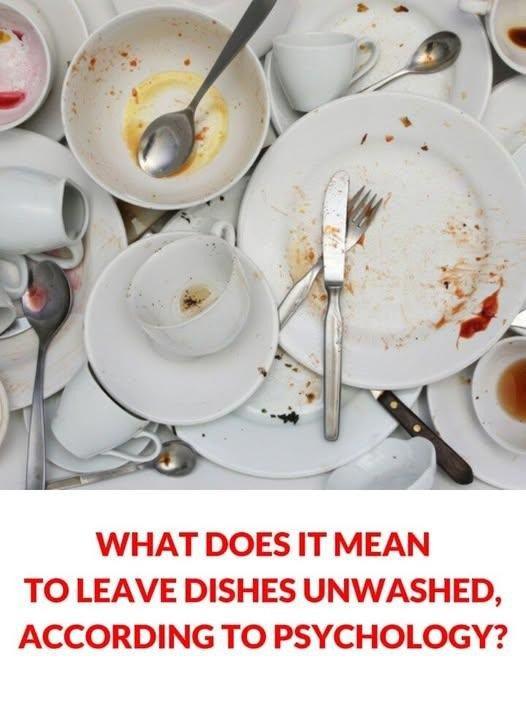
Your kitchen sink is not a moral scoreboard. A pile of dishes does not make you lazy, irresponsible, or a bad person. What it can be — if you look at it with curiosity rather than judgment — is a gentle prompt to ask yourself how you are really doing.
Are you exhausted? Overwhelmed? Carrying more than your share? Struggling with something bigger that has stolen your energy for the small stuff? The dishes will get done. But paying attention to what they might be reflecting about your inner world could be the more important task.
Sometimes, the most insightful thing you can do is pause before the sink — and listen to what it is trying to tell you. 🍽️
Note: This article is for informational and entertainment purposes. If you are experiencing persistent low motivation, difficulty with daily tasks, or emotional overwhelm, please consider speaking with a qualified mental health professional.
